On Reading Poetry

Mild panic. This is what I am often met with when I mention to other grown adults that I am a poet. That I still write the stuff, with a poetry collection to my name, and another on its way. This reaction is understandable considering the typical experience people have of annotating the odious stuff at school, or trying their hand at it on the heels of heartbreak or adolescent angst. Besides, who even reads poetry these days?

As the saying goes, 'one man's garbage is another man's treasure', or my slight preference for the German version 'Des einen Freud ist des anderen Leid' (one man's joy is another man's sorrow). Reading poetry is arguably a challenging sort of reading. It demands non-passive readers. There is no light-touch skim, or a way to bullshit through (a little unfair because readers of poetry more than prose,  are likely to encounter an occasional whiff of the unsavory stuff.) This is not because the quality of poetry is measured by the use of archaic language or love poems, but because poetry is subjective to a fault. It has all the reputation of baking - with none of the mass appeal. There is an assumption of precision and craft, which is true enough - but poetry is also a living art form and thrives on serendipity and improvisation. Whether it's formulated like a fiddly, multi-step Croquembouche or treated like hastily microwaved leftovers, when delivered at the right place and time, poetry can strike like memory, sound like a song, stop time like a warning.

TLDR #1 Poetry is highly subjective to both reader and writer. Whilst it has a reputation for being a fairly prescriptive and fiddly written form, poets today might both adhere to this and ignore it in equal measure, a fact that annoyingly, has little to no bearing on the reader's actual enjoyment of the final piece
There are verses and poets that are, of course, beloved and well-known. Shared in graduation cards ('two roads diverged in a yellow wood' or 'if you can dream but not make dreams your master...'), in funeral invitations ('do not stand at my grave and weep'), read out at weddings (tread softly, for you tread on my dreams or 'Let me not to the marriage of true minds'). There is nothing wrong with this being the chief expectation of what poetry is, but it does not fully deliver one of the best things about poetry - when it stuns with the ordinary, when the temperate flies close to the sublime. When it makes you feel some type of way, or it's just very prettily arranged - words that don't pull any punches, serving insight or deliverance. As a reader and writer of poetry, I am curious about how others perceive both the minutiae and grand gestures of life. What writers choose to remember, and how they want to talk about it. This is probably why poetry in its traditional form is a reliable wing-man to add a touch of flair to what is somber or dignified. It also makes sense to me as a form of expression to turn to when the full gravitas of adult experience floods the adolescent mind. There is wisdom in how young people act - and poetry lends itself to taking something overwhelming and breaking it down to a true form, to let it steep for a while.

TLDR#2 Poetry is often used as a condiment to life events, but I argue that it is just as impactful as a lens to explore the every day, whether as a youthful attempt to triage a sudden burst of life experience, or for seasoned writers a way to curate and preserve - a way to note what is worth remembering
What about modern poetry? There must be something between Billy da Poet and William Shakespeare, surely? Poetry collections can be found often on a single shelf in a (bigger) bookshop, with persuers in the single digits. I suspect it's because the section is seen as intimidating (bad) or thought of as irrelevant (worse.) Not helping matters is the fact that poetry in its contemporary form can be rather cavalier and unreliable. A form of storytelling that is perceived to lose its plot before it gets to the end.  I suspect the liberal use of narrative deception is to blame, or poetic license recklessly issued on the assumption that the average person does not venture down these roads. (Which is frankly true.) Trust a poet to organise a party they never turn up to. Or to have conversations more filling than the meal that occasioned it. Philisophise with psychotic abandon inside pages then appear shocked that anyone noticed. There are things we want to say, but often may peel off on a side-issue, because we are not sure if we are saying this to ourselves or want to remember a certain thing a certain way. There are sideroads and alleys and pitstops and highways, and  many of us expect you to bring your own damn sleeping bag and dictionary if you are to visit. 

TLDR#3 In which I seem to suggest modern poets being charmingly flighty, borderline distracted, and not all that literal does not help much with the PR problem of our genre (but I will always speak of this as a feature, not a bug)
Then there are questions of if the poet  writing to be read, and if so, on page or out loud? Are they writing to remember, and don't mind if it's being read, but please don't let anyone ask them about it. Or are they writing the thing that must be said, to connect with an anonymous many or to leave someone behind. I believe the motive of the poet is no easier to glean than in prose but leaves a marked effect on how the work is received. Makes sense right? There are less lines in which to bury a lead. This is not a bad thing.  I once saw a review of my book which mentioned a poem which I tried to tell myself was a filler poem (let's be real, there are no filler poems). It was a poem I liked but didn't necessary expect for it to resonate with anyone else, the fact that it did delighted me. It taught me that it felt the most 'right' to focus on the overall narrative of the collection, and to let the reader find what they need to. With poetry the fourth wall may as well be a veil. You might just about see the glint of a ballpoint in your peripheral vision the further you get into a collection.
TLDR#4 Poetic motive matters to the overall work, and although this may not be wholly obvious, the poet themselves are much more perceptible in their work than in prose. Poets may choose what and how to write about something, but it's up to readers to uncover what is there to find. 
I recently ordered a bounty of recent work by other fellow Hong Kong poets. Reading these have made me feel incredibly fortunate to be a member of this community. Hindsight is always 20/20, but through absense and distance, I can appreciate what an extraordinary gift it was to cut my teeth as a writer surrounded by these folk. Although I met many of them and got to know their work in an open-mic setting, the range in work - stylistic, narrative, perspective,  was as diverse as the poets themselves. What people choose to write about, and how they talk about it is something I find fascinating by default, whether I know them or not. This is why I struggle to 'rate' poetry. As with anything I read, I enjoy reviewing poetry, but find rating a collection almost impossible. At best, it's like being asked to rate several books in a series, for work that is so deeply subjective - and endearingly random in what might move a person, it seems like an odd thing to do. A single poem in a collection might stay with me well after I first encountered it, rendering the whole book a 5-star read. A book can be an atmospheric delight, without a single poem striking me on a personal level and still be a 5-star read for its transportive prowess. Then there are books that are a slow build, or leave you with something unexpected at the end. A book of poetry is not to be judged, not really. It's a privilege to visit with people's interpretative living for awhile. In short there is far too much to recommend itself, or factor in a collection of poetry to sincerely abide to a star-rating. I am much clearer on what constitutes a 3-star novel than a 3-star poetry collection. 

TLDR#5 It challenging to 'rate' poetry vs prose. With poetry, the sum of its parts can be greater than the whole, or a single poem can deliver a soul-tizzying solo. A book of poetry is not to be judged, not really. 'It's a privilege to visit with people's interpretative living for awhile.' (Bear in mind that a poet is writing this. I am fond of my bias here.)
Sometimes I finish a book of poetry with less information than I went in with, but a greater sense of the writer and a sense of what they think is beautiful or important. It may look like light work because 60 poems is technically digestible in one sitting, but I do not recommend it. Reading poetry is work, depending on how you want to approach it. In a way, it's like listening to an album for the first time. You may hone in on the lyrics and miss something in the music. It is a bit of a dance, between poet and reader - there is often much more than meets the eye after an initial read.  For me at least,  it sometimes requires multiple re-reads of individual poems or even the entire collection. Though it appears there is less to sift through in terms of pages, don't underestimate the times a poem gives you pause, or asks something of you.

TLDR#6 Reading poetry is kind of like a choose-your-own-adventure. I have no idea where I will end up at the end of the book. Often times, I re-read poems or whole books to deepen my understanding. There is always more than an initial reading can offer. Do not judge a book's heft by the number of its pages.
If after all of this you are not deterred and you do decide to pick up a book of poetry, know that feeling lost is a part of the experience. There are some poets who are faithful writers - who oblige every footnote, give context, stick to the damn story. There are others that will take you somewhere but won't lead you down its ruins or high-streets. It can sometimes feel as intimate as reading a letter, resonate with life right now, or feel as though you are looking at blurry film photography of someone's childhood. 

TLDR#7 Expect to be a spectator when reading poetry. Sometimes you are at sea with too much cloud cover. Other times the course is charted and followed faithfully. There is merit in both ways of experiencing a book. (If you are lucky, this could even be the same book)
Why would anyone even read poetry? It requires a level of focus and attention asynchronous to modern life. As a poet myself I am often tempted by fiction I can casually lose myself in than the dizzying, sometimes confusing, walk by the water's edge  where somebody's barely legible subsconscious operates the tide. Still, what a marvellous companion to life,  to tap into our collective experience and proactively empathise with the business of living. If books are a way to experience a thousand lives, then poetry supplies the colour and sound effects. 

TLDR#8 Reading poetry requires mindfulness, and a bit of effort, and there are direct rewards to reap from this
It hardly merits the work or the reader to peruse poetry distractedly. Life is also like this. 
Read more poetry.
2023 Wrapped: Bug, Feature, Other

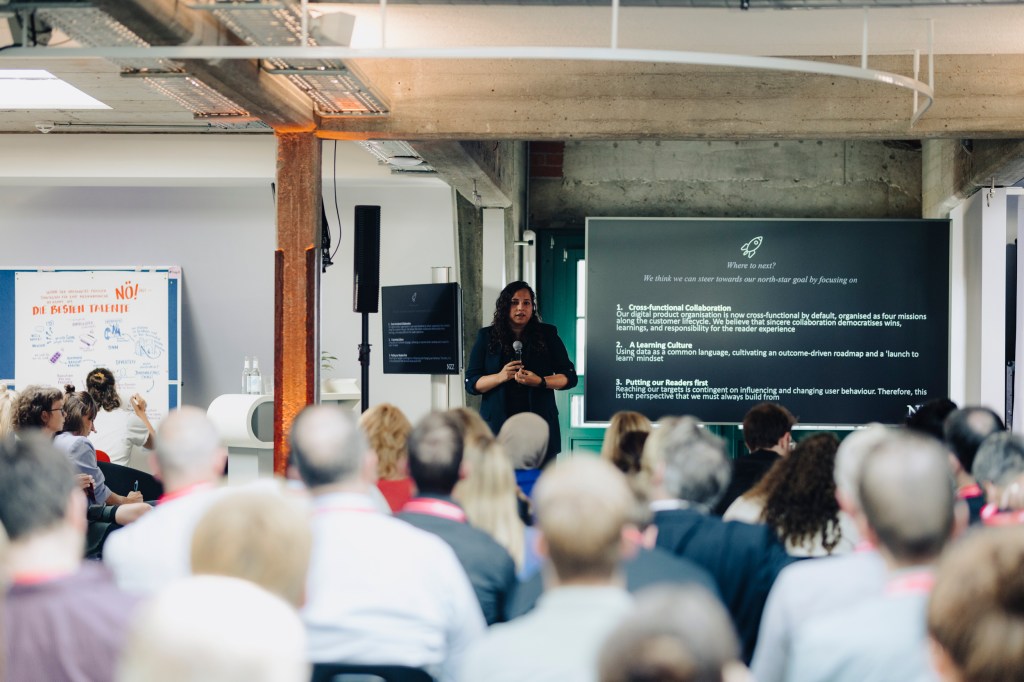
Image credits: ©nextMedia.Hamburg | Laura Müller

2023 was a dinosaur year, professionally speaking. Here are my parting thoughts to this year, and the things I am taking forward into the next one.

I summarise my experience (officially) working in digital product, talk about one of the key factors for success this year, share my learnings on AI, and end with a reflection on work/life balance when it feels like ‘the juggle is real.’ If you choose to visit with these words for a while, I hope they are as useful to you, as this year has been to me. 

  1. Becoming a ‘Product Bro’ 

My media career started in Digital Product – I just didn’t know it at the time. We called it ‘interactive marketing’ in 2010 and I was part of a team developing mini games, mobile apps, dabbling in augmented reality for marketing activations, and creating a gamified digital content ecosystem. From there my career pivoted to subscriber acquisition marketing and the management of conversion journeys across the customer lifecycle.

Officially stepping back into this sphere this year was a full-circle moment, but it didn’t feel this way at the beginning. I suddenly felt green, wrong-footed which after thirteen years in this industry, was new.

In times of uncertainty, I tend to turn to good books and even better people. Here are my top nonfiction reads of the year:

  • Inspired by Marty Cagan
  • Empowered by Marty Cagan
  • Continuous Discovery Habits by Teresa Torres
  • Sprint by Jake Knapp and others
  • Competing Against Luck by Clayton M. Christensen
  • Immunity to Change by Robert Kegan and Lisa Laskow Lahey
  • The Diary of a CEO: The 33 Laws of Business and Life by Steven Bartlett

For the Writers in the room

  • A Room of One’s Own by Virgina Woolf
  • On Writing by Stephen King

( and for the readers in the room, check out my top fiction of the year here)

I spoke to a lot of kind folks in the product space, played with frameworks and watched and listened to a ton of content. Much of what I found out was both validating and relieving  because though the methodologies were new to me, the reasons for them were not, and have informed decisions throughout my career. There is no single golden rule, but I can more or less distil my first year of learning to the following:

  1. You cannot grow without your customer – growth is intrinsically linked to user behaviour 
  2. In order to influence user behaviour, you must first understand it, validate it, and build the bridge for your customers to behave in a way that achieves your ideal business outcomes
  3. A change in user behaviour will correspond to changes in your bottom line, do not plan for one without the other 
  4. So build a bunch, test a bunch, steer it towards what makes a better product for users, and help them become better users of your product

Easy, right? 

Writing this  is me slaying the imposter syndrome dragon that turned out to be a fly in a room I’ve sort of always been in. Opening that window and asking it to (politely) buzz off, was a nice milestone to hit.

  1. ‘A Rising Tide Lifts Us All’ 

I am quoting Aliya Itzkowitz at Scoopcamp in Hamburg this year (quoting one of her team who in turn, the internet tells me is quoting John F. Kennedy)  This is one of my favourite things about this industry. Externally, this manifests in the readiness of so many industry colleagues to jump on a video call or grab a coffee and talk through a challenge or opportunity, and internally I have spoken at both Scoopcamp and INMA this year about how cross-functionality is a core factor for success. A cross-functional culture is the breeding ground for a learning culture which is a requirement for data centricity which in turn, and most importantly, gives us the best chance for putting our readers first (for why this is important, see 1.) 

  1. ‘The Robots are Here’ …to stay

Ay, yay,yay AI…what a fascinating conversation starter (or ender) this was in 2023. My recommendation for anyone curious about this topic is to do two things. There are a host of free and paid courses from the likes of Google directly, or IBM, Coursera…and many more to help get a baseline understanding of the possibilities and standard definitions in this space. This went a long way in helping me organise my thoughts before acting on what is my second suggestion; spend some time with your friendly neighbourhood data scientist. Here are some of my takeaways from the year, thanks to many conversations, some that I shared at a recent FT Strategies workshop :

  • Organisationally, establish ongoing iterative processes to identify, validate, and coordinate AI use cases 
  •  AI projects can very quickly become a home renovation. Can you afford the time to build it? Think of resourcing, technical dependency  and organisational focus as key factors in your assessment. Similarly, when evaluating use cases, consider if this will be important in one year, and does this ultimately support your brand value proposition? If your customers won’t use it, don’t even think about it. (Again…see point 1) 
  • At this early stage, before major upgrades have happened to the services we know and use, start small, focus on what is helpful, and necessary right now and build from here.
  • When it comes to data models, remember ‘garbage in, garbage out.’ Watch out for data definitions and ever-changing regulatory considerations
  • Consider the impact of your own governance on build implications (eg, what does keeping a human in the loop mean for existing processes and technology?)

Here are also some of the ways I used ChatGPT this year

  • It helped me with my German. Especially when I had a question about why phrase X should be used instead of Y. I also used it to practise my German writing skills. 
  • It wrote all the clues to my family advent chocolate hunt (sorry kids) – and asked it to adapt them when the clues were too easy (not sorry kids)
  • It was able to quickly do basic maths from a data set eg. helping me work out everything from travel time, time differences, percentage changes year on year from multiple categories (yes excel can do this too but I had to do 0 formatting, and cell-fiddling) 
  • It was able to aggregate how much butter and sugar I needed to buy from a stack of holiday recipes…the answer to this I will take to my grave.  

What strikes me about this list is, (bearing in mind this is a sample size of one, and limited to my intuitiveness with the app), there were so many every-day use cases that had me reaching for it that really should make anyone in any consumer space sit up. It was helpful, intuitive and easy to use. Ignoring all the noise around generative AI, it’s this reason that I think the kinks will be worked out and regulation will find its feet because before long this level of ease and utility will become a consumer expectation. 

  1.  Boundaries vs Balance 

The poetry open-mic night I co-founded eighteen years ago in Hong Kong is still going strong. I am proud of this. I am also incredibly proud of my two teenagers, the first book I wrote, the poems I still write today, and the other hobbies and interests I have gained over the years. I like what I do for a living, spending time with people as much as I like to ignore them to spend time with books, and the interplay of all of these things in my life. 

My parenting made me a better poet, my poetry made me a better communicator at work.These are unalienable self-truths – I don’t make the rules, this is just how it panned out.

Over the years, colleagues and friends have asked me about balance, any habits or tricks to share about the optimal way to set up your life to maintain equilibrium. I am not sure what I said before, but sixteen years into this juggle this is what I know. It was never about balance. Balance denotes equality, and a rigid adherence to maintain it. It was also never about having it all, which incidentally you CAN have, just not at the same time. 

For me, at least, it really was about setting up boundaries vs balance. Balance could be an outcome of this, sure, but boundaries were promises I made to myself. Boundaries acknowledged what was important to me, and allowed me to plan my attention as fluidly as a busy family life will dictate. This does not mean there is no discipline that goes into it. For instance, I take my reading goal for the year as seriously as my professional goals. 

Am I suggesting everyone have kids and write poems? Goodness, no. I am just saying that there are things that are complementary to your skillset that are not necessarily derived from or restricted to one area of your life. Work skills are not just for work and life skills are not just for your personal life. It all matters, and creating space for what mattered to me allowed the best of all worlds to come together. 

WRITING

The remains of my many childhood journals are in various stages of decomposition in landfills in at least four different countries. I have preserved very little, and what I have kept I cannot bear to read. Nor for the most part can I make out the handwriting or the knotted thoughts I was trying to unpick underneath the writing. As an adult, if I take pen to paper, it’s generally in response to some other symptom that can only be sweated out, purged in whatever metaphoric fever I find myself fighting. Some may call this inspiration. 

The thought of leaving out a journal that could be read, (judged, really) – childish scrawls, ideas shallow and new, shocking punctuation et al caused me to panic-rip pages and dispose of them immediately. My subconscious regrettably came to some sort of conclusion that I wrote in order to be read and therefore all my words had to be read-y.

It’s embarrassing to think about now. As though every sentence I wrote began with a shot from the muses’ well, as though folk would be interested in again, the diaries of a _child_, whatever success I would go on to have in later life. Is it any less self-indulgent than your average aspiring writer?  Perhaps even on-the-nose considering my particular poison is poetry. Thankfully, this writing-to-be-read feeling didn’t last. If it did, I doubt it would have ever moved beyond a feeling. 

It took me ten years to publish my first poetry collection and I have a blog that averages one post per quarter on a good year. This is hardly the behaviour of a rational person who primarily writes to be read. Having actually experienced the pleasure of having my work published and read – even taught (!) I can confirm whilst thrilling, it was not the motivation behind the work. It’s clear now that wanting to publish a book so other people can read it, is like wanting to get married just to have a wedding. To abuse this metaphor further, I find that just like a dress that may not fit years later, there is a stylistic statute of limitation on a piece of work too. This is likely the main reason I will always write. To hear what I sound like, on the outside. It is not elegant or inspiring and is hardly less self-absorbed – but I feel a little bit better that it doesn’t presume perfection, or even an audience.

For years I would chide myself for not being prolific enough. Being a part of a spoken word community helped maintain the habit on a good day, and produced bad poetry on a bad one. I would often grasp at whatever was happening in my life at that time, ram it into the shape of a poem so I could show up on a stage and prove I had something to say, which is in itself the quickest way to say absolutely nothing. Then I would edit it within an inch of its life and find the thing that caused the poem in the first place. Sometimes, several years later. (This is why I have a particular distaste for poems that are forced to rhyme. A natural rhyme is wonderful, a forced one conjures images of a baby straining against a swaddle – parents are told it is the natural order of things, contrary to the wailing evidence in front of them.)

I also loved the extra-curriculars afforded to a writer. Reading feels like a side-hustle, participating in literary events, long conversations dissecting books, performing my work, workshopping with other writers, writing reviews and generally having a space to talk about all the parts of life we have collectively dog-earred. This also serves as a brilliant distraction from writing, and when I grew sick of reading the same poems out loud over and over again, it eventually became the fastest one-way ticket to imposter syndrome.

It’s been a couple years since my first book came out. I have made some big swings in my personal life, shed miles of skin – real, metaphorical, other – and needed to lie down a lot. I am no longer a part of a wonderful spoken word community as this is now on the other side of the world. The pandemic has meant that my goodbyes here sort of petered out, no dramatic farewell, just life that had to be gotten on with. 

The pressure to write is gone. The good kind is always within reach, but I am glad to let go of the bad kind, which would often detract from the point of it all. Some of this has to do with having scratched that childhood itch. I wrote a book, people have read it, some have even liked it, but the dream wasn’t the book. The dream was to keep writing.  

I do not regret the journals I have thrown out. The words I have deleted. Poems that start in the shower or as I am falling asleep that never get written. The times I have forgotten my notebook, or a pen, or simply forgot to think about it. I am no longer desperate to only archive the things that make me look best, because writing is a true thing, and the process is the point. I do not feel guilty when life gets in the way. In fact, for my kind of writing, life HAS TO get in the way. Just living is passive writing. In many ways I don’t ever stop. In my head, on social media, when I tell stories or write emails.  So perhaps, what I am really trying to say is that writing is the way I know true things. This is how I know there will be another book. A truer book, to reflect the next writer I am, and the next, and the next.

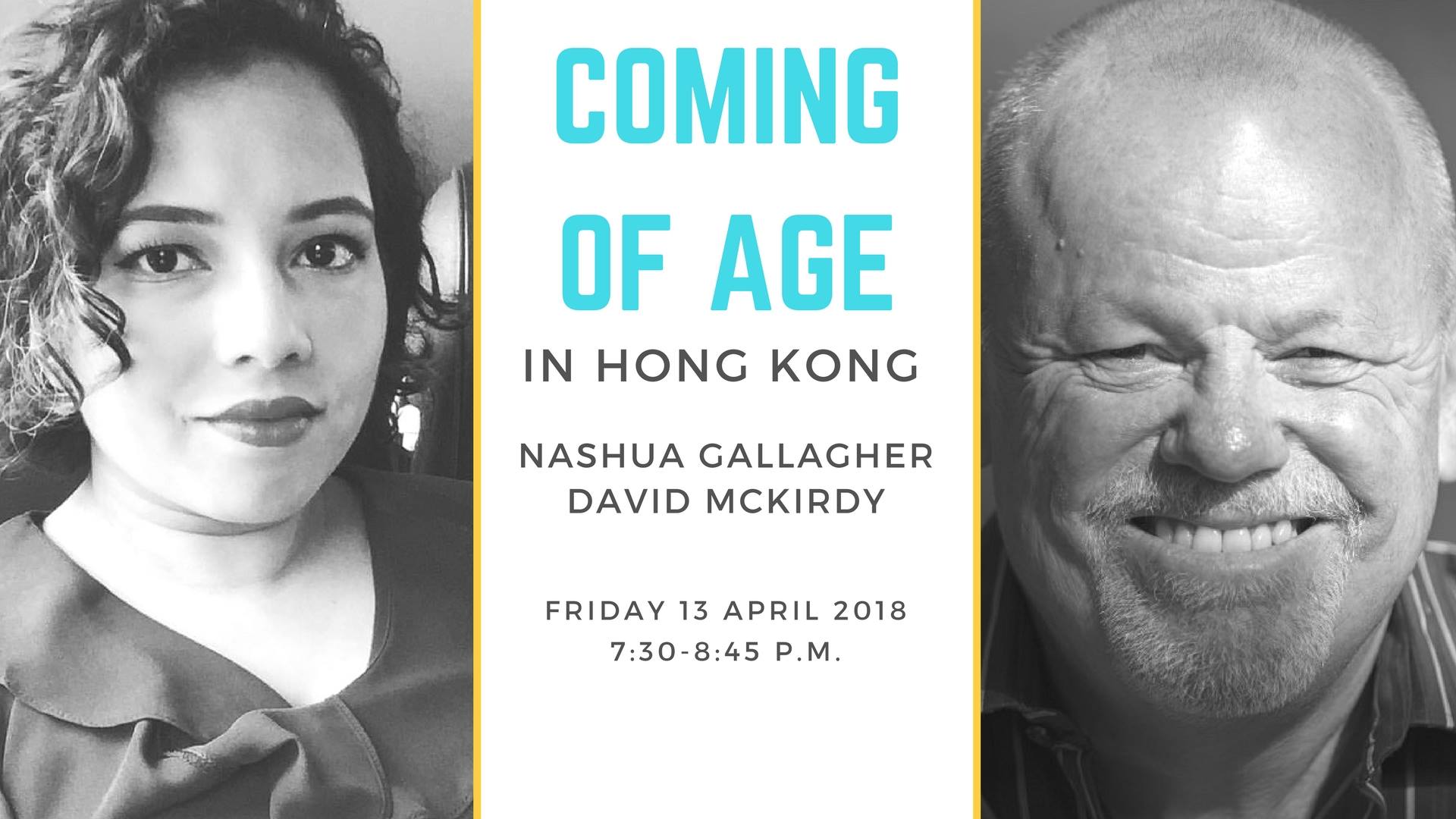
Coming of Age in Hong Kong

Coming of AgeAn Asian Cha reading series event.

Join me and David McKirdy as we discuss poetry, writing, growing up in Hong Kong, and the ever elusive idea of ‘Home.’ Discussion will be moderated by Cha’s illustrious co-editor, Tammy Ho Lai-Ming.

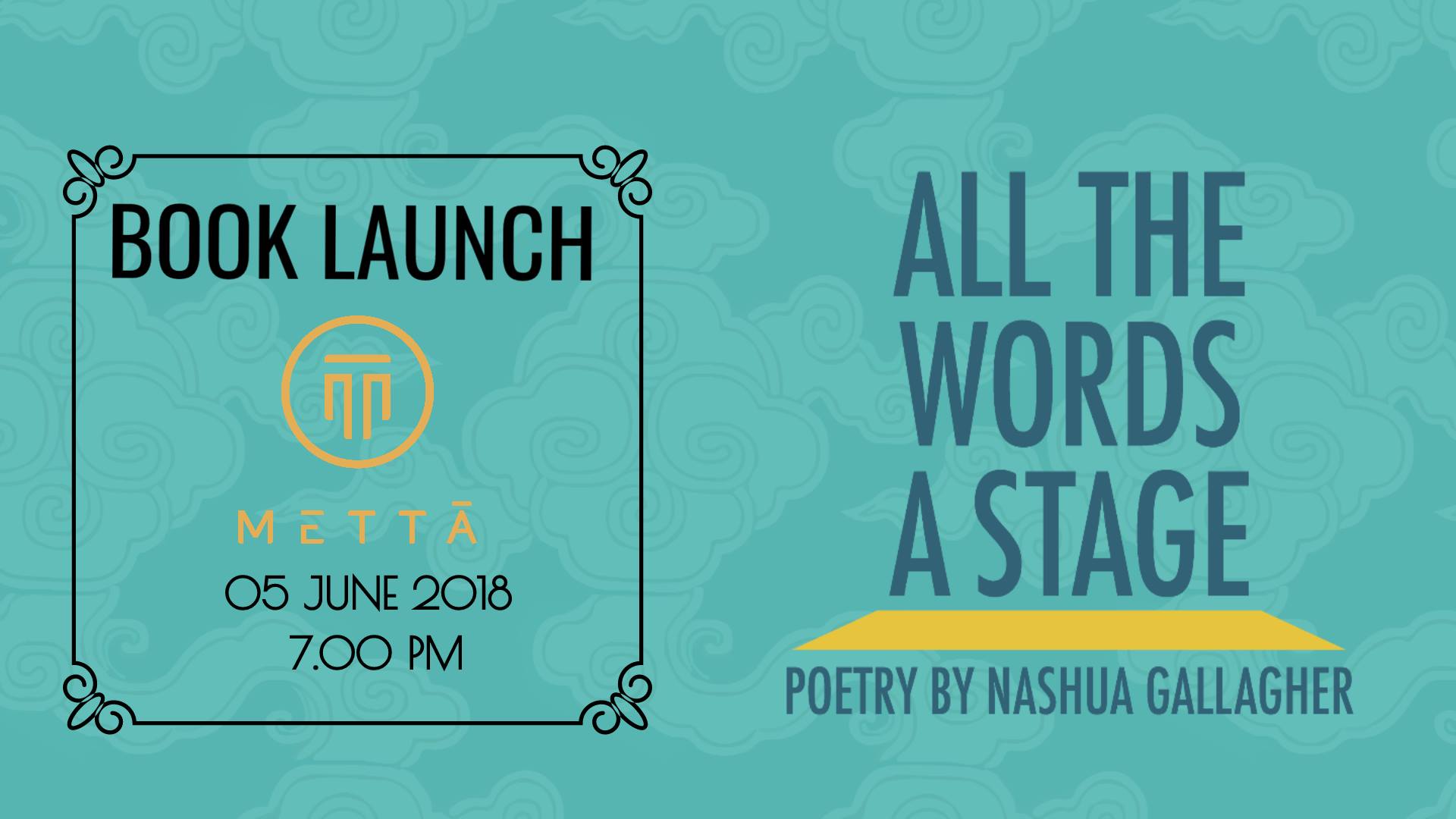
I will be previewing excerpts from my debut collection of poetry; ‘All the Words a Stage’ (Chameleon Press) out in May.

More info on the Asian Cha event page.

Hope to see you there!